How different minds transform art
Read time 3 minutes
For generations, autism has been framed through the lens of deficit, something to diagnose, manage, or correct. Yet history, particularly art history, suggests a quieter and more compelling narrative. What if certain minds that diverge from social norms are not simply outliers, but visionaries? What if neurodivergence is one of the forces that continually reshapes culture’s visual and imaginative horizons?
Art has always thrived at the edge of perception. It is here, in the tension between convention and intuition, that many neurodivergent creators have left indelible marks. Their work does not merely reflect the world. It recalibrates how the world can be experienced.
The precision of perception
Consider the architectural dreamscapes of Stephen Wiltshire, whose ability to draw entire cities from memory reveals a perceptual intensity that borders on the sublime. His work demonstrates not only technical mastery, but a form of visual cognition that transforms detail into poetry.
Similarly, Yayoi Kusama has long spoken about her hallucinatory visions and sensory overwhelm. Rather than suppressing these experiences, she translated them into immersive environments of repetition and infinity. Her polka dots are not decorative motifs, they are existential coordinates, mapping the fragile boundary between self and cosmos.
In each case, perception becomes material. Difference becomes language.
Devotion, solitude, and the creative engine
Artistic breakthroughs rarely arise from casual engagement. They emerge from immersion, from the willingness to inhabit an idea long after others have moved on. Many neurodivergent creators possess precisely this capacity for sustained focus.
Glenn Gould, though working in music rather than visual art, exemplified this phenomenon. His obsessive attention to structure and nuance reshaped interpretations of Bach, revealing emotional clarity through analytical rigor. His creative process suggests that deep focus is not a limitation, but a form of artistic alchemy.
In painting, the meticulous botanical studies of Albrecht Dürer and the obsessive patterning in the work of Agnes Martin have led scholars to speculate about neurodivergent traits. Whether or not such retrospective diagnoses are accurate, their art reveals minds deeply attuned to order, repetition, and contemplative discipline.
This is not mere craft. It is perception transformed into philosophy.
Vision beyond social convention
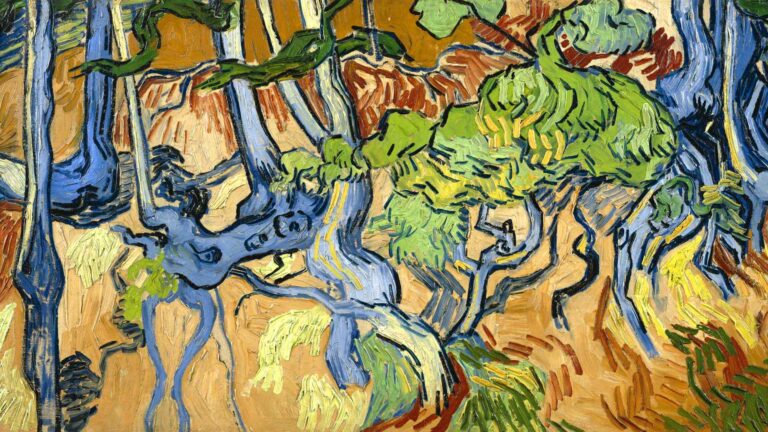
The life of Vincent van Gogh continues to invite speculation about neurological and psychological difference. His letters reveal sensory intensity, emotional volatility, and profound isolation, yet his paintings transformed color into an expressive force that permanently altered modern art.
Similarly, contemporary artist Temple Grandin, though primarily known for her work in animal science, creates visual systems and designs rooted in spatial thinking that reflect a distinctly autistic mode of cognition. Her work bridges science, empathy, and visual reasoning, illustrating how neurodivergent minds often move fluidly between disciplines.
These creators challenge a persistent cultural myth: that conformity produces innovation. In reality, innovation often emerges from those who perceive the world from an oblique angle.
Cognitive diversity as cultural evolution
The art world increasingly recognizes that originality depends on diversity of mind as much as diversity of identity. When artists such as Judith Scott, whose sculptural forms were shaped by both neurodivergence and disability, gain recognition, the definition of artistic intelligence itself begins to expand.
Her fiber-wrapped objects resist easy interpretation. They are tactile meditations, silent but emotionally resonant. They remind us that meaning in art is not always verbal or conceptual. Sometimes it is embodied, sensory, and instinctual.
Neurodiversity, in this context, becomes not a social challenge but an ecological principle. Culture evolves through variation. Aesthetic language grows through difference.
Toward a future of expanded vision
To imagine autism as part of human evolution is not to romanticize struggle. It is to recognize that perception itself is plural. When society creates space for neurodivergent artists to flourish, it does more than support individuals. It enlarges the collective field of imagination.
Art has always been humanity’s way of rehearsing the future. The artists who see differently often help us live differently. They expand the emotional and visual vocabulary through which reality is understood.
In this light, neurodivergence is not simply a medical category. It is a creative frontier.
And the future of art—like the future of perception—may depend on how willing we are to embrace minds that illuminate what others have yet to see.