Identity, myth, and the power of invisible art
Read time 5 minutes
Few figures in contemporary art have created mystery as effectively as Banksy. Their work boldly appears on public walls around the world, while their identity remains hidden. This deliberate choice only boosts their cultural impact. In a world focused on visibility, Banksy’s anonymity is not a limitation; it is a strategy, a shield, and perhaps the most compelling part of the work itself.
Anonymity as artistic strategy
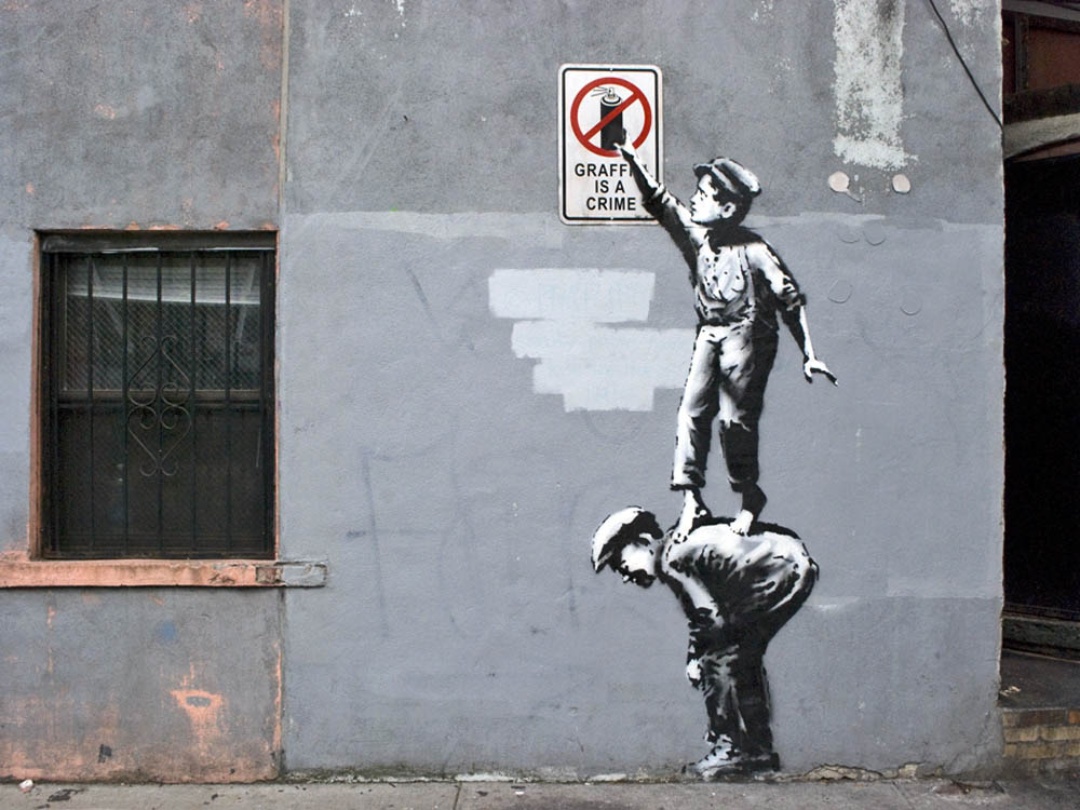
Banksy’s rise occurred alongside the growing criminalization of graffiti and unauthorized street art. Staying anonymous is not just a personal choice; it is a practical need. Much of Banksy’s work is produced illegally, often appearing overnight on buildings, bridges, and urban structures. By hiding their identity, Banksy avoids arrest while keeping the freedom to create without institutional limits.
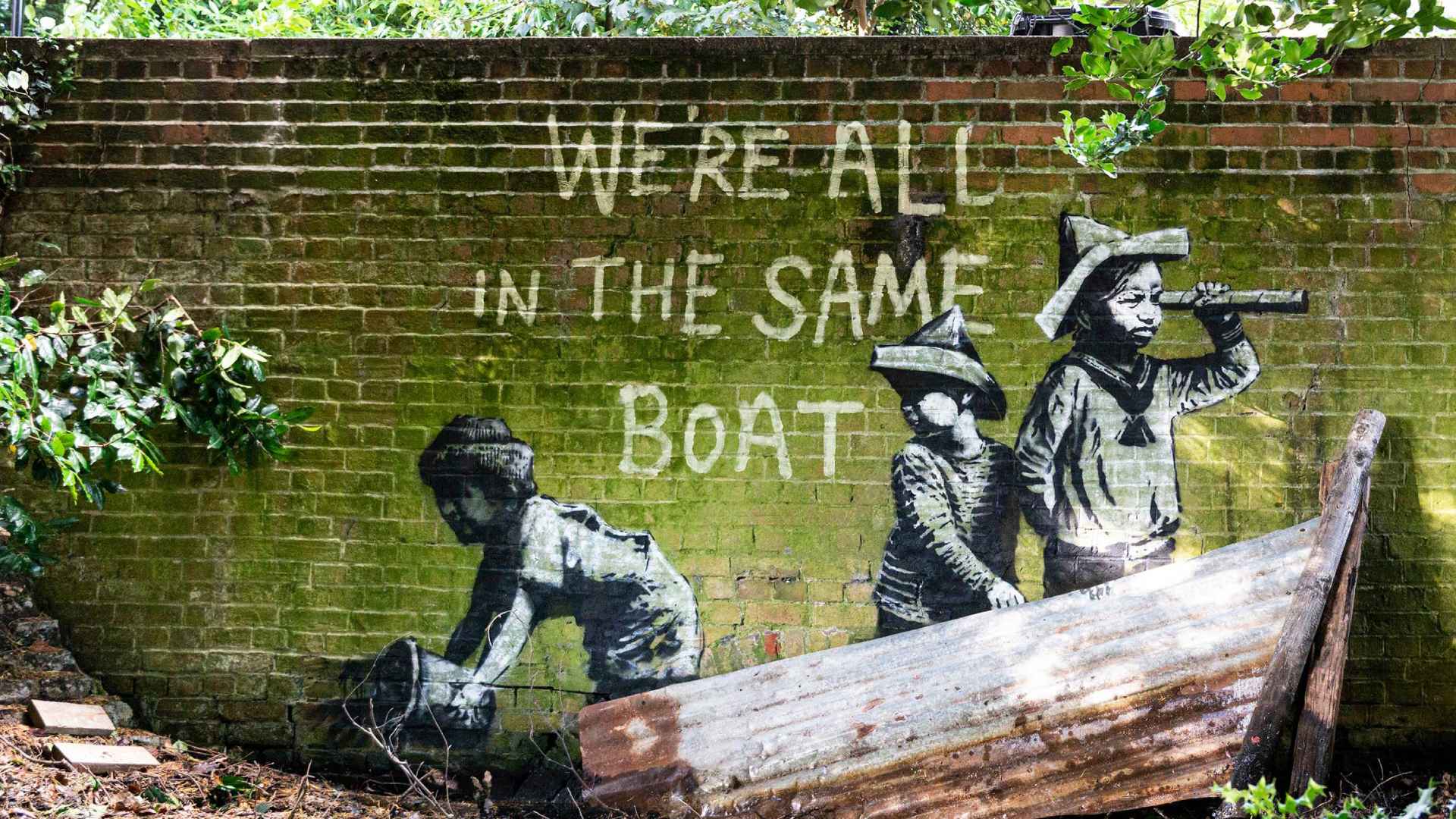
Anonymity not only protects; it also strengthens. Without a face, biography, or public persona, the artwork stands on its own. Viewers are not distracted by the artist’s background, education, or social status. Instead, the message, often political, satirical, and sharp, takes center stage. Works like Girl with Balloon or the self-shredding piece at auction challenge both artistic norms and the systems that commercialize art.
The meaning behind the name “Banksy”
Even the name Banksy carries layers of ambiguity, similar to the work itself. No one knows its true origin, but several theories attempt to explain it. One popular idea suggests “Banksy” comes from the Bristol graffiti scene, where tagging culture often favors short names that are easy to spray quickly. Some believe it may relate to the word “bank,” possibly referring to authority, money, or institutions, common targets of the artist’s critique. Others see it as a reference to “banks” as in riverbanks or urban edges, the places where street art often flourishes. There is also the chance that the name is meant to lack meaning, chosen because it reveals nothing. In this way, “Banksy” serves less as a name and more as a brand, a mark that signals disruption, wit, and subversion without tying itself to any identity. Like the artist behind it, the name avoids definition inviting interpretations while withholding certainty.
The logistics of global presence
One intriguing aspect of Banksy’s career is the international reach of their work. Murals have appeared in cities like London, New York City, Bethlehem, and Paris. This raises an interesting question: how does one anonymous artist operate across continents without being caught?
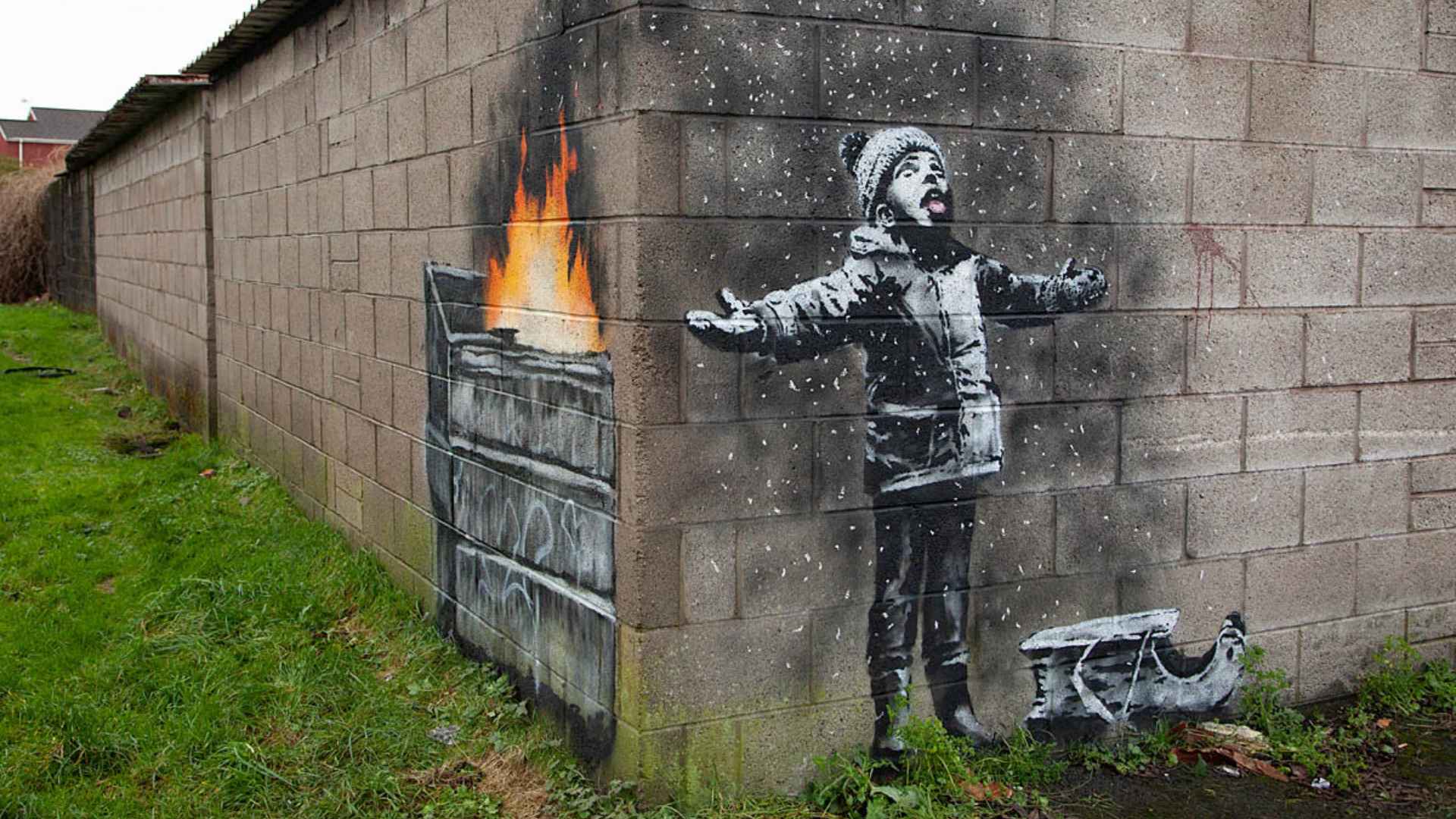
The answer likely involves a mix of planning, teamwork, and resources. While the public often imagines a solitary figure working under the cover of darkness, the size and frequency of installations indicate logistical help. Scouting locations, preparing stencils, managing timing, and documenting the work all need coordination. It’s likely that Banksy works with a trusted group of helpers, assistants, fabricators, and fixers, who help carry out the vision while keeping it secret.
One artist or a collective?
The discussion over whether Banksy is a single artist or a collective has gone on for years. Some theories point to Robin Gunningham, a British artist whose background fits with Banksy’s early work in Bristol. Others have speculated about ties to Robert Del Naja, noting that artwork has appeared in cities where his band has toured.
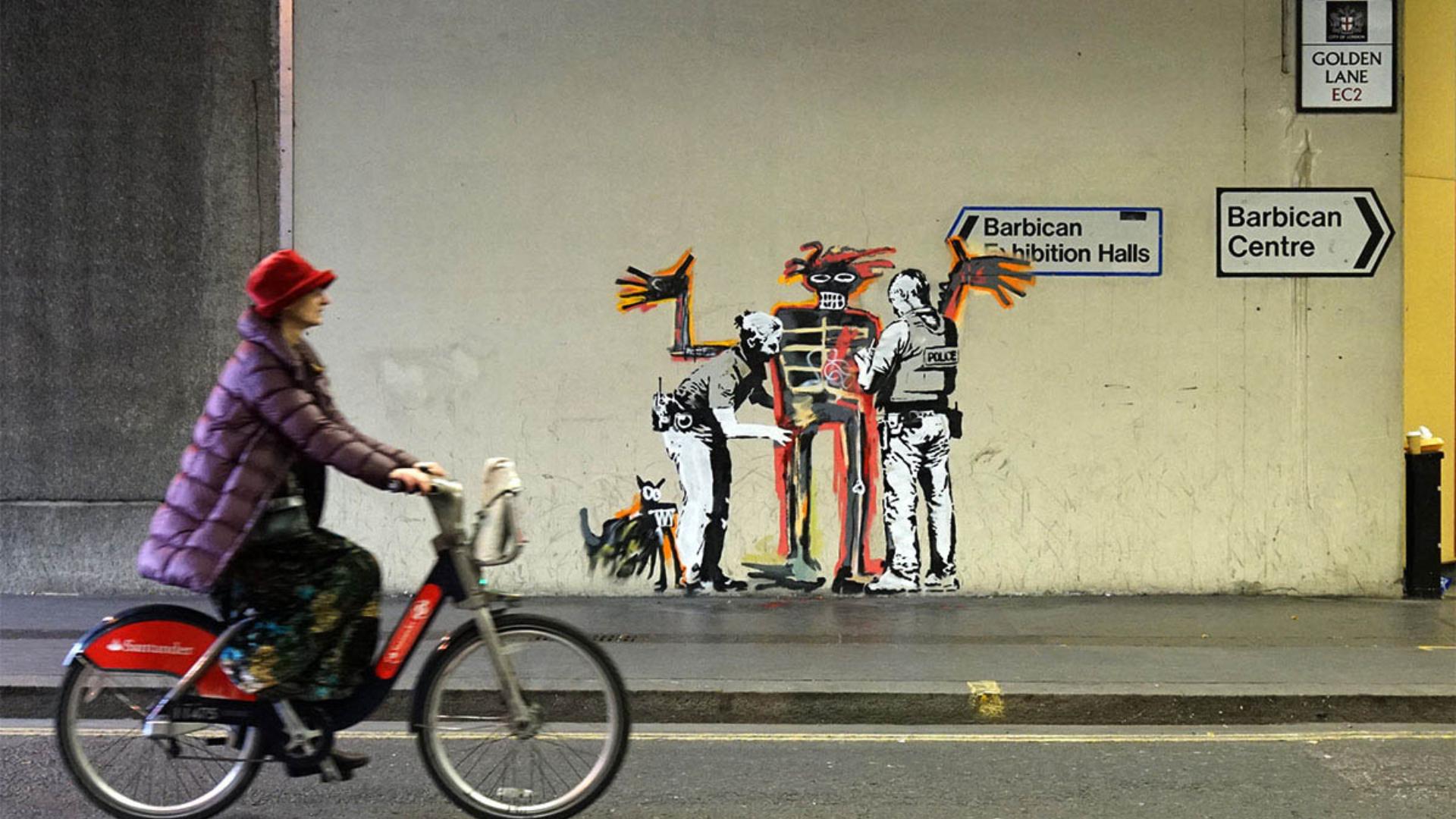
However, the consistent style, tone, and themes across decades suggest a main creative voice. The humor, irony, and visual language are remarkably cohesive. This points to a primary artist, possibly Banksy themselves, backed by a network that enables work on a global scale. In this model, Banksy is both an individual and a collective operation: a unique vision realized through collaborative effort.
Wealth, access, and mobility
Not necessarily. While early support or opportunities may have helped, Banksy’s success has undoubtedly brought in significant income through prints, exhibitions, and controlled releases. The artist has also shown a strong understanding of the art market, often turning it on its head while still gaining from it.
Additionally, many installations are relatively low-cost when it comes to materials, stencils, spray paint, and timing. The real currency is not money, but access: knowing where to go, when to act, and how to stay unseen. This kind of access can come from networks, not just wealth.
The role of myth in modern art
Banksy’s anonymity has become a key part of their story. In a time of oversharing and constant visibility, refusing to be known is radical. It creates room for speculation, debate, and intrigue, elements that keep the public engaged.
This myth-making is not by chance. It aligns with the themes of the work: critiques of surveillance, authority, capitalism, and media. By staying hidden, Banksy embodies the very resistance their art often shows. The artist becomes a symbol, not merely a person.
When mystery is threatened
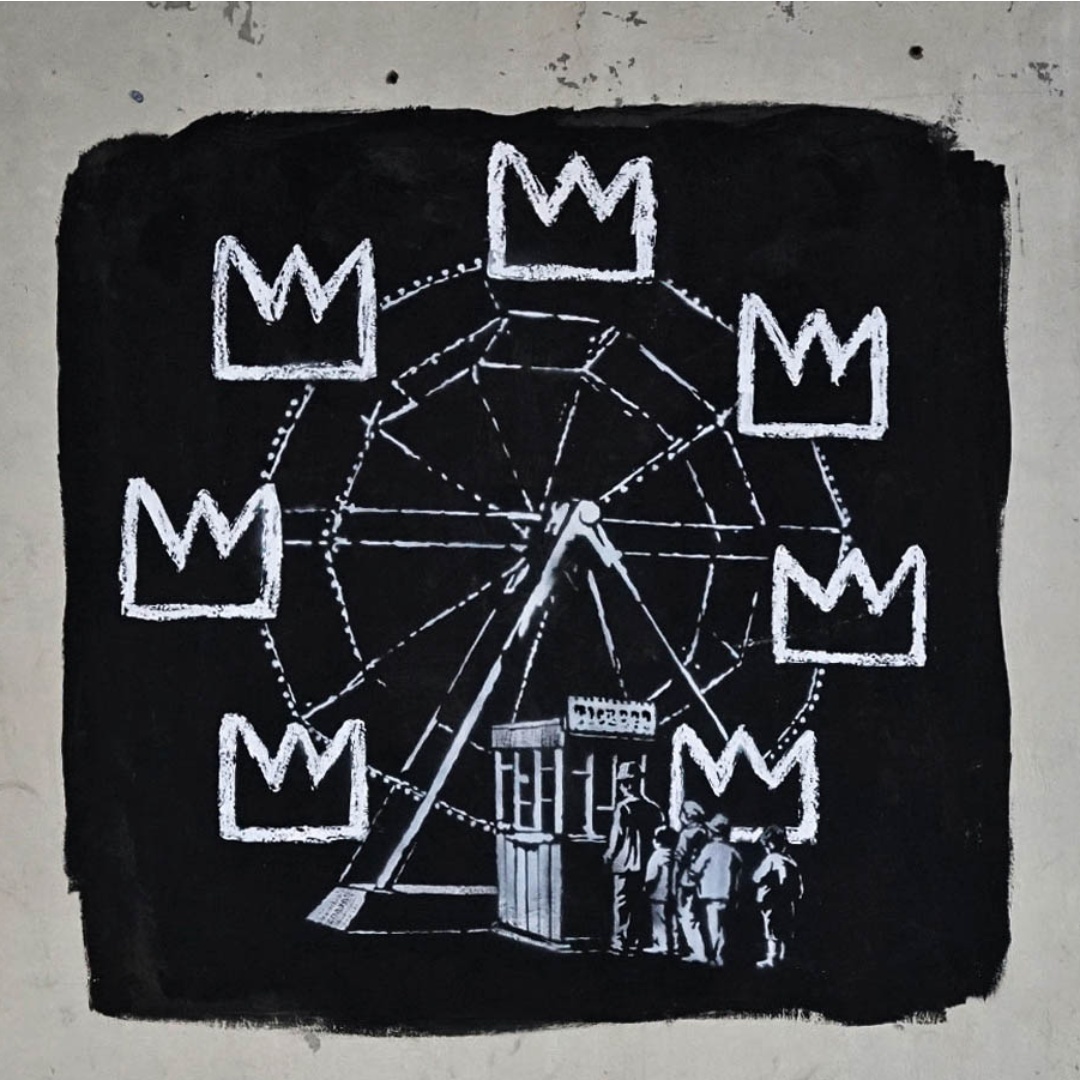
But beyond the truth is something more unsettling: the urge to know at any cost. There is a cultural impatience in this unmasking, a need to solve something that was never meant to be solved. Identifying Banksy closes a space that was intentionally left open. It reduces ambiguity to biography. It exchanges myth for certainty. In doing so, it risks undermining what made the work resonate in the first place. Banksy was never just an artist to identify but an absence that allowed the work to exist without permission, without ownership, and without end.
Identity as medium
Ultimately, the question of who Banksy is may be less important than what Banksy represents. Whether a single artist or a coordinated group, wealthy or resourceful, the power lies in the art and the mystery surrounding it.
Banksy has turned anonymity into an artistic medium, one that challenges conventions, disrupts systems, and invites the world to look closer. In doing so, they have redefined what it means to be an artist today: not just a creator of images, but a curator of presence and absence, visibility and invisibility.
And perhaps that is the final irony. By refusing to be seen, Banksy has become impossible to ignore.