What Christo and Jeanne-Claude’s The Gates still teaches us
Read time 2 minutes
In February 2005, Christo and Jeanne-Claude didn’t just install an artwork, they staged an experience that transformed Central Park into a living, breathing canvas. The Gates remains one of the most iconic large-scale public art events of the 21st century, and as we approach Earth Day 2026, its relevance feels more powerful than ever.
I saw the installation in person, just one year after graduating from art school, a pivotal moment when inspiration carries a different kind of urgency. What I encountered wasn’t just visually striking; it was transformative. It redefined what art could be, not as something you observe from a distance, but something you move through, something that surrounds you, challenges you, and ultimately stays with you.
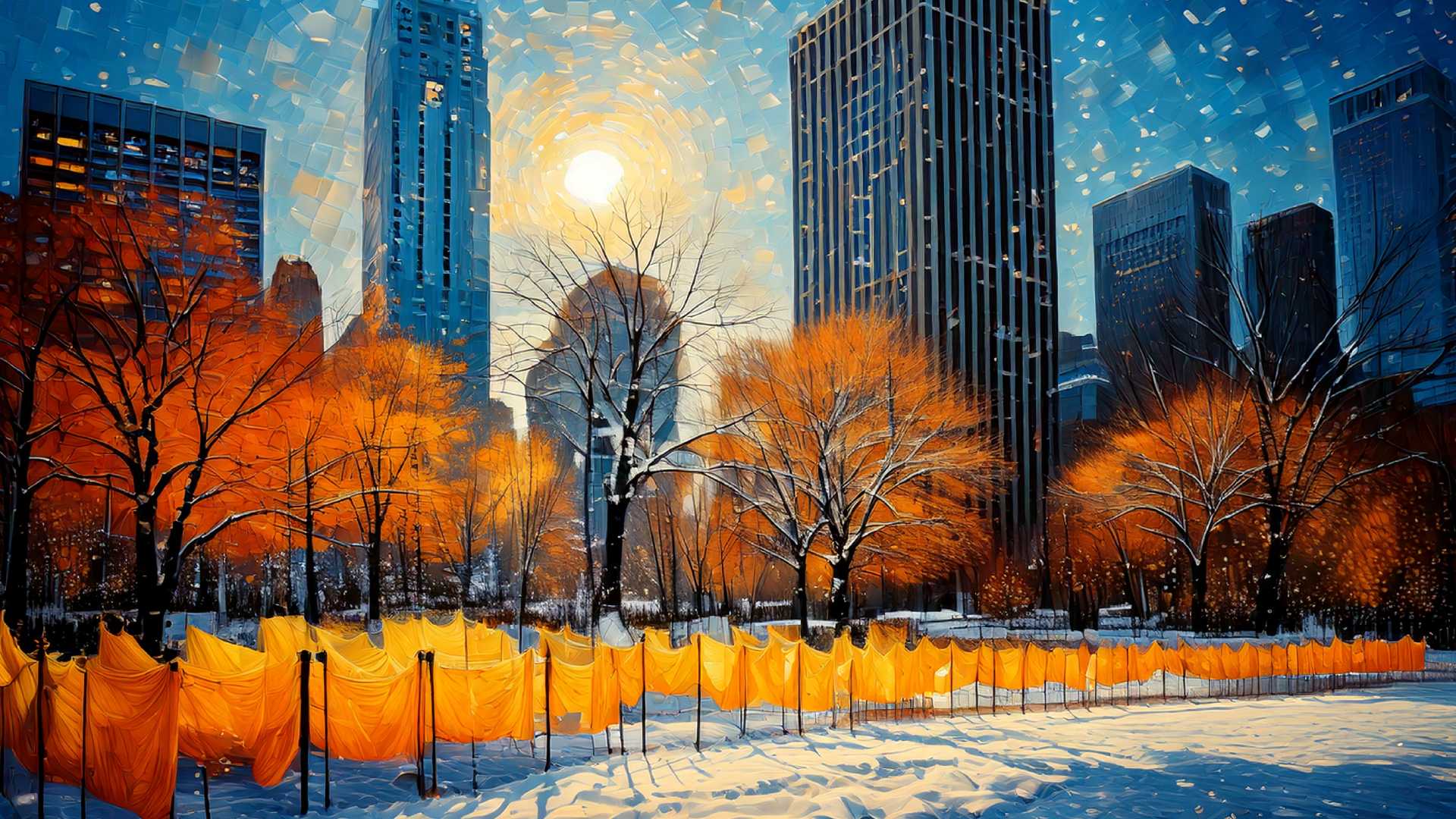
Spanning 23 miles of pathways, over 7,500 saffron-colored gates carried flowing orange fabric panels that ignited the winter landscape. Against the starkness of February bare branches, gray skies, and patches of snow, the color was nothing short of electric. The fabric shimmered and shifted with the wind, creating a constantly evolving visual rhythm. Every step revealed a new composition, a new perspective, a new reason to pause. It wasn’t just contrast, it was activation. The park came alive in a way that felt cinematic, immersive, and completely unforgettable.
What made The Gates so compelling, and so market-defining in the world of public art, was its ability to seamlessly merge creativity with environment. Rather than imposing on the landscape, Christo and Jeanne-Claude amplified it. The installation followed the park’s natural pathways, guiding visitors through a curated yet organic journey. It was experiential design before the term became a buzzword, an artwork that understood audience engagement at scale.
For me, experiencing The Gates just a year out of art school felt like stepping into a masterclass. It expanded my understanding of possibility: art didn’t need walls, permission, or permanence to be impactful. It could exist in the open, accessible to millions, and still maintain depth, intention, and emotional resonance.
That sense of temporality is exactly what makes The Gates so aligned with the spirit of Earth Day. In a world increasingly focused on consumption and permanence, this installation offered a different model, one rooted in ephemerality, respect, and minimal environmental impact. After just sixteen days, it was gone, leaving Central Park exactly as it had been. No trace. No footprint. Just memory.
And yet, that memory is powerful. It lingers. It shapes how we see not just art, but the environment itself.
As we reflect on Earth Day 2026, The Gates stands as a blueprint for how art can engage with nature responsibly while still delivering awe at scale. It reminds us that the most impactful experiences aren’t always the ones that last forever, but the ones that make us see the world differently, even if only for a moment.
Because sometimes, the most powerful transformation begins with simply walking through it.