What paintings really represent
Read time 2 minutes 15 seconds
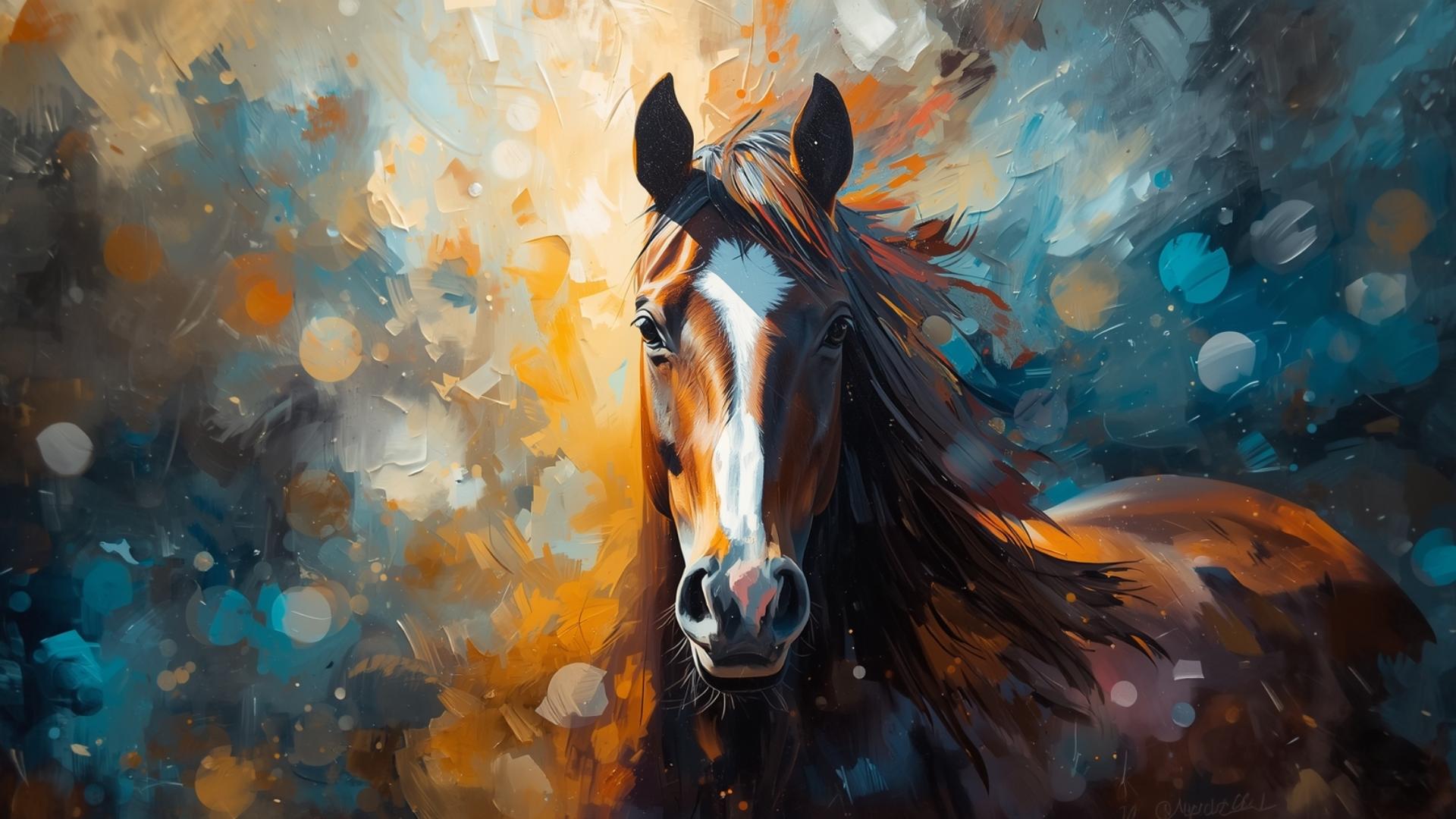
A painting is often approached as a depiction of something recognizable: a horse, a landscape, a figure. But this way of seeing limits what painting truly is—and, by extension, how we collect it. A painting is not fundamentally a likeness of a horse. It is a likeness of a mental concept. What appears on the canvas is not reality duplicated, but thought made visible.
Before pigment meets surface, the subject already exists in the artist’s mind. Memory, perception, emotion, and intention shape the image long before it takes physical form. Even the most realistic painting is not an objective record of what stood before the artist. It is an edited vision, defined by decisions: what to emphasize, what to distort, what to leave out. The horse in the painting is not the horse in the field; it is the artist’s idea of the horse.
Abstraction makes this unmistakable. When recognizable objects fall away, meaning does not disappear—it concentrates. Abstract painting is often misunderstood as being “about nothing,” when in fact it is about something more fundamental: structure, sensation, rhythm, psychological space. These works do not rely on likeness to communicate. They operate at the level of concept, translating inner experience into visual form. The absence of a visible subject does not signal a lack of content, but a shift in where that content resides.
This understanding matters deeply for art collectors. Collecting is not simply the acquisition of images; it is the acquisition of ideas. When a collector responds to a painting, they are not only responding to what it depicts, but to how it thinks. Color relationships, compositional tension, and scale all carry intellectual and emotional weight. A painting succeeds not because it resembles something familiar, but because it articulates a compelling way of seeing.
Even representational works function this way. Two artists painting the same horse will produce radically different results because they are translating different mental frameworks. One may emphasize power and motion, another fragility or symbolism. For collectors, recognizing this distinction shifts the focus from subject matter to vision. The question becomes less “Do I like horses?” and more “Do I resonate with this interpretation of the world?”
This shift also explains why great collections are cohesive even when the imagery varies. A strong collection is often unified not by theme or style, but by a shared conceptual sensibility. The works speak to one another because they are aligned at the level of thought. Collectors who understand painting as a mental construct tend to build collections that feel intentional, layered, and enduring.
To collect art with depth is to collect perspectives. A painting is a fixed object, but the idea it contains remains active—continuing to unfold as it is lived with, revisited, and reconsidered over time. When collectors engage with art on this level, ownership becomes less about possession and more about dialogue.
In this sense, painting is never merely an image, and collecting is never merely accumulation. A painting does not replicate reality; it reframes it. And to collect such works is to surround oneself not with things, but with ideas—each canvas a record of how another mind once saw, questioned, and reimagined the world.