How negative space transforms your drawing
Read time 1 minute 40 seconds
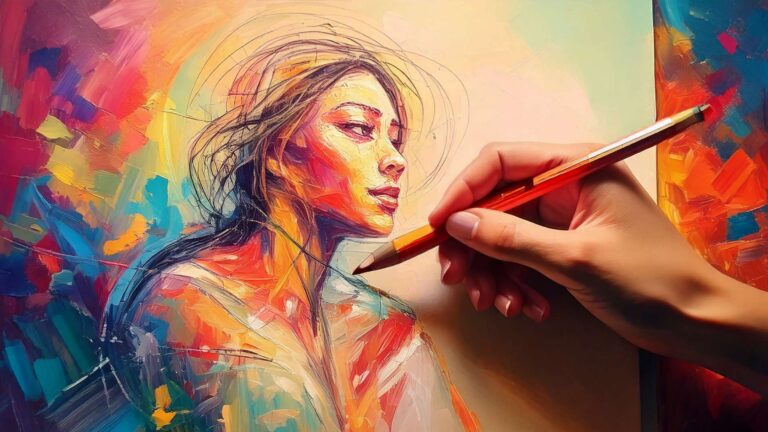
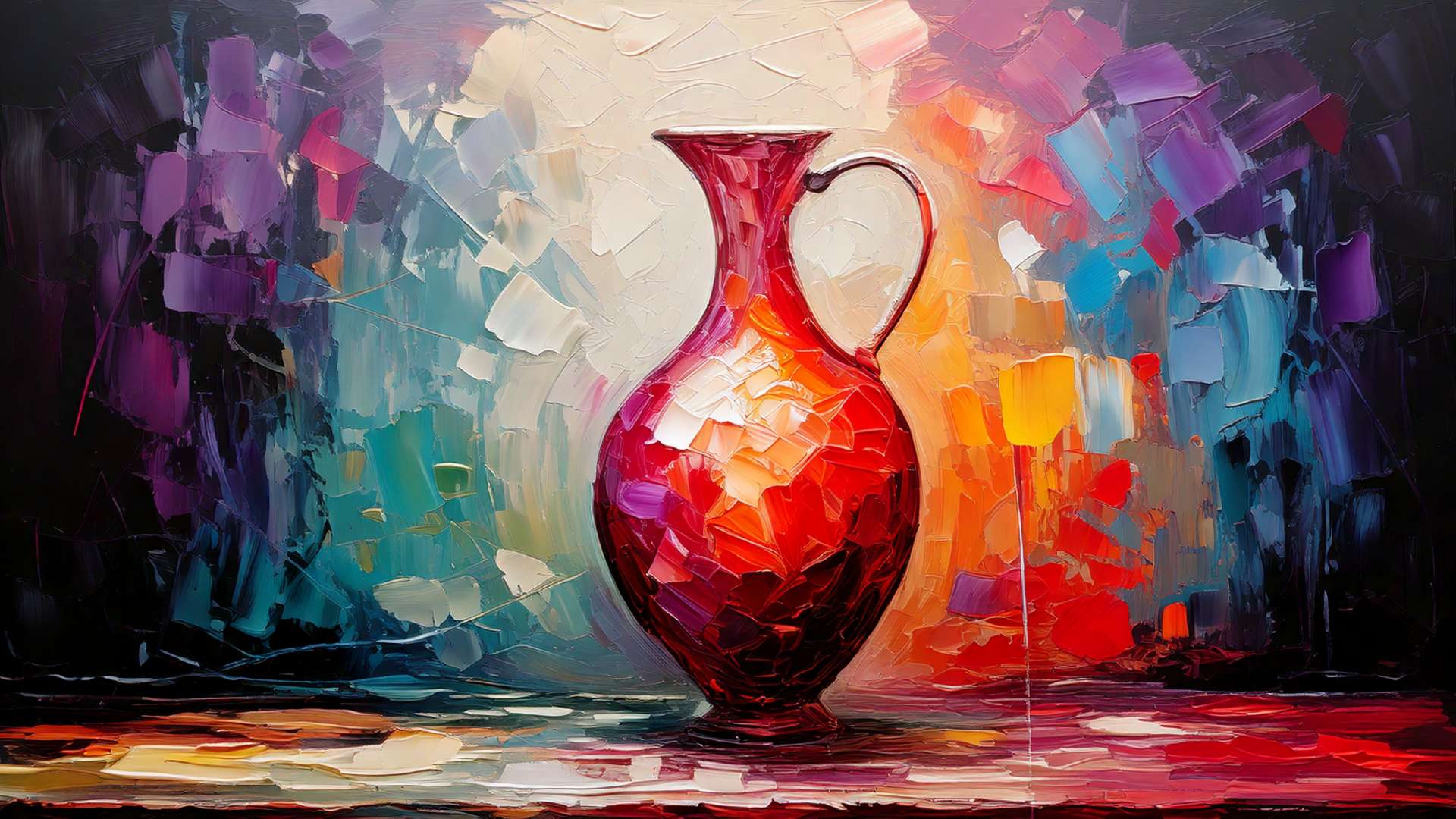
If you’ve ever stared at a vase and felt like your drawing just wouldn’t come together, you’re not alone. Many artists—beginners and pros alike—hit a wall when trying to capture shapes perfectly. But here’s a simple, surprisingly effective trick: don’t focus on the vase, and draw the space around it.
Sounds counterintuitive, right? That’s what makes it so powerful. Most of us approach drawing by trying to replicate what we think an object looks like. We rely on memory and assumption: “Vases have a rounded body, a narrow neck, a base…” But the problem is, your brain’s idea of a vase is rarely what’s actually in front of you. When you shift your focus to the space around the vase—its background, the gaps, the negative space—you force your brain to truly see. Suddenly, irregular shapes, angles, and relationships reveal themselves in a way that drawing from memory never could.
This technique is called drawing negative space, and it’s a game-changer for anyone that wants to improve their accuracy and confidence. Negative space—the empty areas around and between objects—is just as important as the object itself. By mapping out these invisible shapes first, the vase practically draws itself. You don’t force the form; you let it emerge naturally from the environment around it.
There’s another bonus: focusing on space takes the pressure off. Instead of worrying about whether your vase “looks right,” concentrate on abstract shapes—lines, curves, and gaps. Your hand follows what you see, not what you imagine. The result? More precise, more expressive drawings that feel alive and dynamic.
And this method isn’t limited to vases. It works for chairs, hands, faces—any subject that challenges you. Struggling with a tricky pose or weird angle? Look at the space around it. The gaps between fingers, the shapes created by shadows, even the negative shapes between a figure and the background—they all act as guides to help you draw with confidence.
Think of it as a secret shortcut to see the world like an artist. When direct attempts fail, sometimes the best solution is an indirect approach. By drawing what isn’t there, you capture what is. The results are not just accurate—they’re compelling, polished, and uniquely yours.
Next time your drawing feels stuck, remember: don’t fight the vase. Draw the space around it, and watch your art transform.