
What a drawing reveals about the artist
Read time 1 minute 50 seconds
A drawing is more than an image. It is proof that an artist existed.
Every line on a page records a choice: where to begin, how hard to press, when to stop. These marks are not accidental. They are the visible outcome of attention, movement, and intent. A drawing doesn’t just show what something looks like—it shows that someone stood before it, looked closely, and decided to respond.
This is what gives drawing its unique power. Unlike digital images that can be generated or repeated endlessly, a drawing carries the unmistakable presence of a human hand. You can see the speed of a gesture, the pause of hesitation, the confidence of a bold contour. The page becomes a map of thought in motion. When you look at a drawing, you aren’t just seeing a subject—you are seeing the artist thinking.
Across history, drawings have served as quiet declarations of human presence. A figure etched into stone, a charcoal animal on a cave wall, a sketch tucked into a notebook all share the same message: I was here. I observed. I made sense of what I saw. Long after the artist is gone, the drawing remains as evidence of perception made physical.
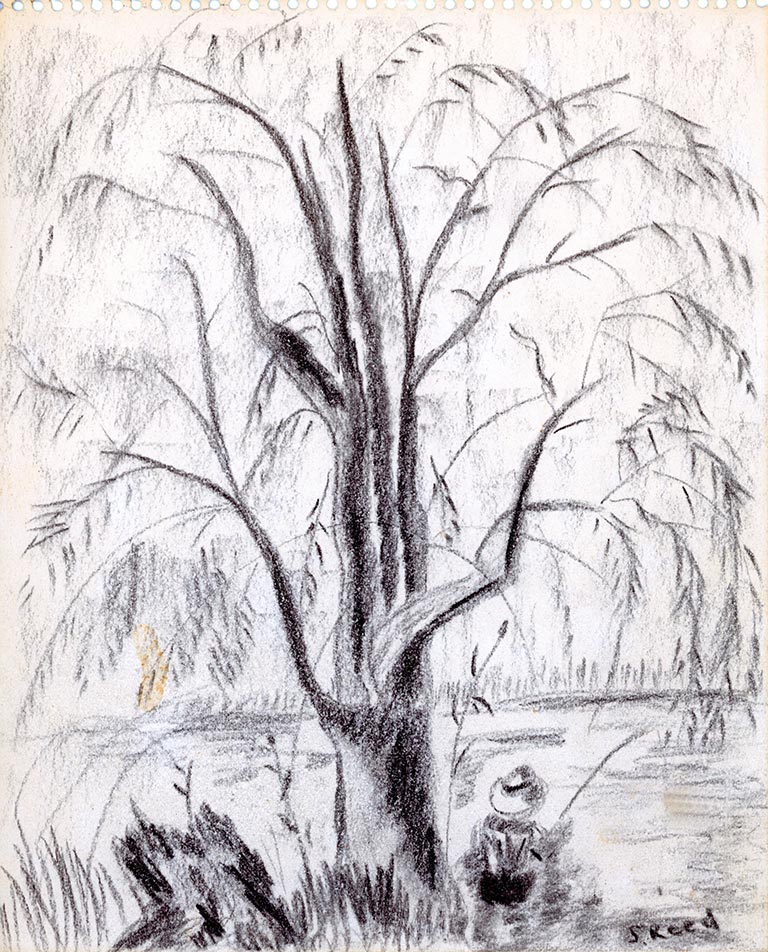
For viewers, this creates an immediate connection. The eye follows the path of the artist’s hand, retracing the same movements across time. There is a shared rhythm between maker and observer. The drawing becomes a bridge between two moments: the moment it was created and the moment it is seen. In this exchange, the artist’s presence is revived.
In a world flooded with images, drawing stands apart because it demands attention from both sides. It requires a body to make it and a mind to read it. It resists automation and shortcuts. Each line insists on effort, observation, and choice. That insistence is its value.
To draw is to leave a record of seeing. To collect or view a drawing is to encounter that record directly. A drawing testifies to the existence of an artist by preserving not just what they saw, but how they saw it. It is personal, physical, and enduring—visual proof that perception once lived in a human hand.